
Marketing loves the funnel. It’s the tidy picture everyone recognizes: awareness leads to consideration, which leads to purchase. But that diagram is now less a map of reality and more a comfort blanket. People don’t move in straight lines, and pretending they do makes strategy weaker, not clearer.
Today’s consumer path loops, restarts, and jumps channels constantly. Someone might see a brand on Meta, hear it again on a podcast, search it during a streaming show, and finally buy through a retail media placement. New platforms, new shopping behaviors, and constant screen-switching have turned the old “step-by-step” journey into something closer to pinball.
“Full-funnel” planning became the default. It sounds comprehensive, but it assumes a predictable path that doesn’t always exist. Viewers and buyers are scattered across a growing number of streaming services and digital touchpoints, so attention is fragmented in ways the old model can’t fully explain.
A Better Way to Think About “Full-Funnel” in 2026
The funnel categories still matter. Awareness, consideration, and conversion are useful labels. What needs to change is how we measure and optimize them.
- Awareness should be tied to brand impact, not just reach. Instead of treating impressions as success, brands need to look at outcomes like lift in ad recall, awareness gains, and attention quality.
- Consideration should be measured across channels. People don’t “consider” in one place anymore. Strategy should track how touchpoints interact — for example, how CTV drives search, or how social content expands the audience pool. This is about understanding influence between channels, not crowning a single last click.
- Conversion should speak the CFO’s language. That means incrementality, ROAS, cost per acquisition, and real revenue lift. Testing frameworks like marketing mix modeling and test/control setups are better suited to help move the sales funnel.
Where AI Fits (When It’s Done Right)
The chaos of modern media isn’t just hard for humans; it’s computationally hard. AI becomes valuable here for three reasons:
- Predicting the best channel mix for a stated business goal
- Rebalancing budgets dynamically as performance signals shift
- Explaining what drove outcomes, so optimization is transparent rather than black-box
AI must be paired with clarity and control: planners and buyers shouldn’t accept automated recommendations they can’t interrogate. Platforms that provide decision logic and allow custom KPI optimization are positioned as the real future, not opaque automation.
The Market Direction: Stages Are Blurring
Upper- and lower-funnel tactics are collapsing into each other. Retail media and CTV now support discovery and purchase in the same environment. Shoppable ads and interactive video make it possible to go from “I noticed this” to “I bought this” without leaving the screen, which breaks old attribution assumptions.
At the same time, premium environments are becoming more important. As ad dollars flow into streaming, advertisers are prioritizing brand-safe, high-quality inventory rather than endless cheap reach. Agencies that can combine first-party audiences, premium placements, and credible cross-media measurement will outperform those who cling to the old funnel slide.
Takeaway
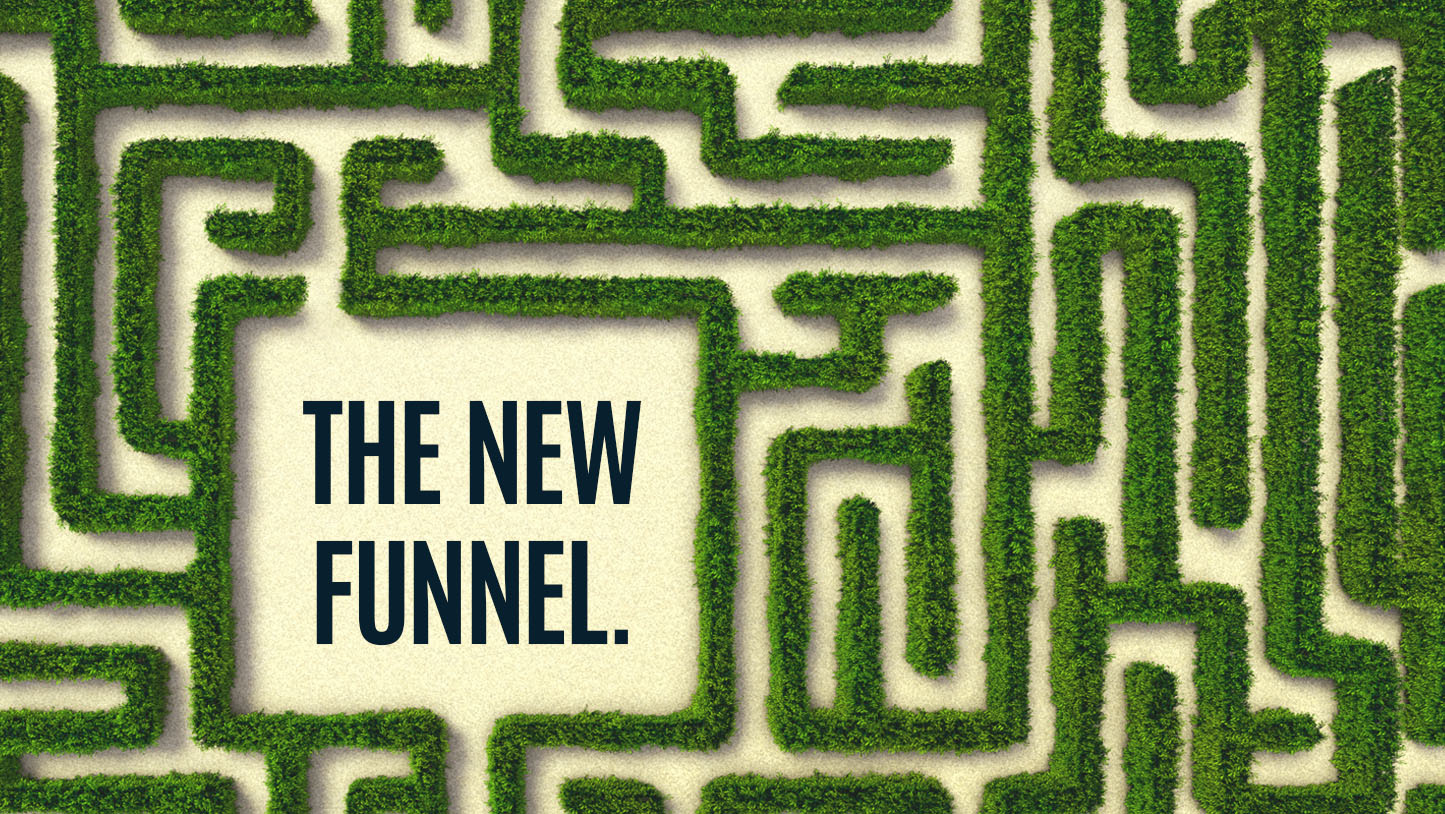
The funnel metaphor isn’t useless — it’s just no longer literal. Consumer journeys are a maze, and strategy has to reflect that reality.
Winning in 2026 means three shifts:
- Measure business outcomes, not platform metrics.
- Use AI that’s neutral, explainable, and KPI-driven.
- Build transparent cross-channel frameworks that prove real impact.
The maze is here to stay. The advantage will go to marketers who stop forcing straight-line stories and start planning for the way people actually move.
Ready to move beyond the funnel and plan for reality? Let’s start the conversation.